|
Qabalah: Ushabti, Shabti Egyptian Shabtis - an answer to a prayerShabti (also called ushabti, or Shawabti) are magical, clay figure statues produced in the early dynasty of the Egyptian empire. Shabti is the Egyptian word for "answerer." The term shabti applies to these figures, prior to the Twenty-first dynasty (21st) of Egypt, after the end of the First Intermediate Period. Shabti also applies to statuettes inscribed with Chapter Six of the Book of the Dead. Otherwise, they might better be defined by the generic term, funerary figurines. (wikipedia: Ushabti). The Shabti were also called Ushabti and Shawabti.
Egyptian myths claim that ushabtis are funerary figurines help do the work of the owner after they are deceased. An Egyptian prayer is made to the statue to bring it to life. Most shabti's are made of clay, some are wood carved. The power of dirt, or clay, was believed to have life-giving properties. Read about theory on life from clay. Ushabtis (shabtis), like golem, are suppose to obey the orders of the owner. But these statuettes animate to specifically serve the soul of the deceased- whose name is carved into its chest along with the prayer to "carry the water" and "do the work" in the netherworld. The earlier shabti may have planted the cultural seed for the later golem and teraphim legends.
Qabalah Home PageEntertainment Magazine |
Kabbalah and Astral Projection Books by Author Robert E. ZuckerDownload free Sample PDFs of two books recently published. Purchase full copies on Amazon.com.
Purchase "Kabbalah's Secret Circles" by PayPal/Credit Card and get personalized autographed copy from the author:
|
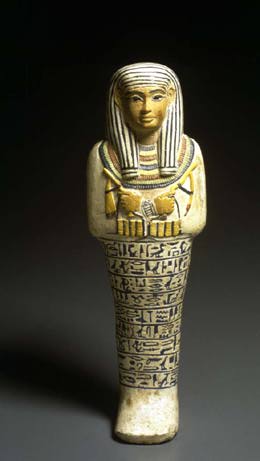



Egyptian Shabtis
|
|
17th - 18th Dynasty Stick Shabtis in the Petrie Museum and Other Collections (Ghp Egyptology by Paul Whelan. This monograph represents the first comprehensive investigation of the characteristically crude wooden "stick" shabtis of the late 17th and early 18th Dynasties. Developed from a case study of examples in the Petrie Museum of Egyptian Archaeology and building upon scholarship that has until now focussed almost exclusively on the importance of their inscriptions, the work offers new perspectives on stick shabtis and their role in the cultic milieu during a transitional period in ancient Egyptian history. Paperback: 160 pages. Publisher: Golden House Publications (May 30, 2007). Language: English |
|
Ancient Egyptian Funerary Statuettes in European Private Collections |
Shabti's from Amazon.com
|
 ,
by Glenn James. This large volume presents a catalogue of 115 shabtis,
or funerary statuettes, held in private collections across Europe. The
study stands out in particular for its high-quality lifesize colour
photographs which illustrate the back and front of each shabti. The
catalogue is arranged chronologically from the Middle Kingdom to the
Ptolemaic period, includes transcriptions and translations of
hieroglyphic inscriptions, descriptions of condition and provenance and a
discussion of comparative examples and their location. The CD presents
full colour images of the shabtis. Hardcover: 264 pages. Publisher:
Cybele (December 31, 2002).
,
by Glenn James. This large volume presents a catalogue of 115 shabtis,
or funerary statuettes, held in private collections across Europe. The
study stands out in particular for its high-quality lifesize colour
photographs which illustrate the back and front of each shabti. The
catalogue is arranged chronologically from the Middle Kingdom to the
Ptolemaic period, includes transcriptions and translations of
hieroglyphic inscriptions, descriptions of condition and provenance and a
discussion of comparative examples and their location. The CD presents
full colour images of the shabtis. Hardcover: 264 pages. Publisher:
Cybele (December 31, 2002).

